New Article from Bell Lab Published in Nature Communications
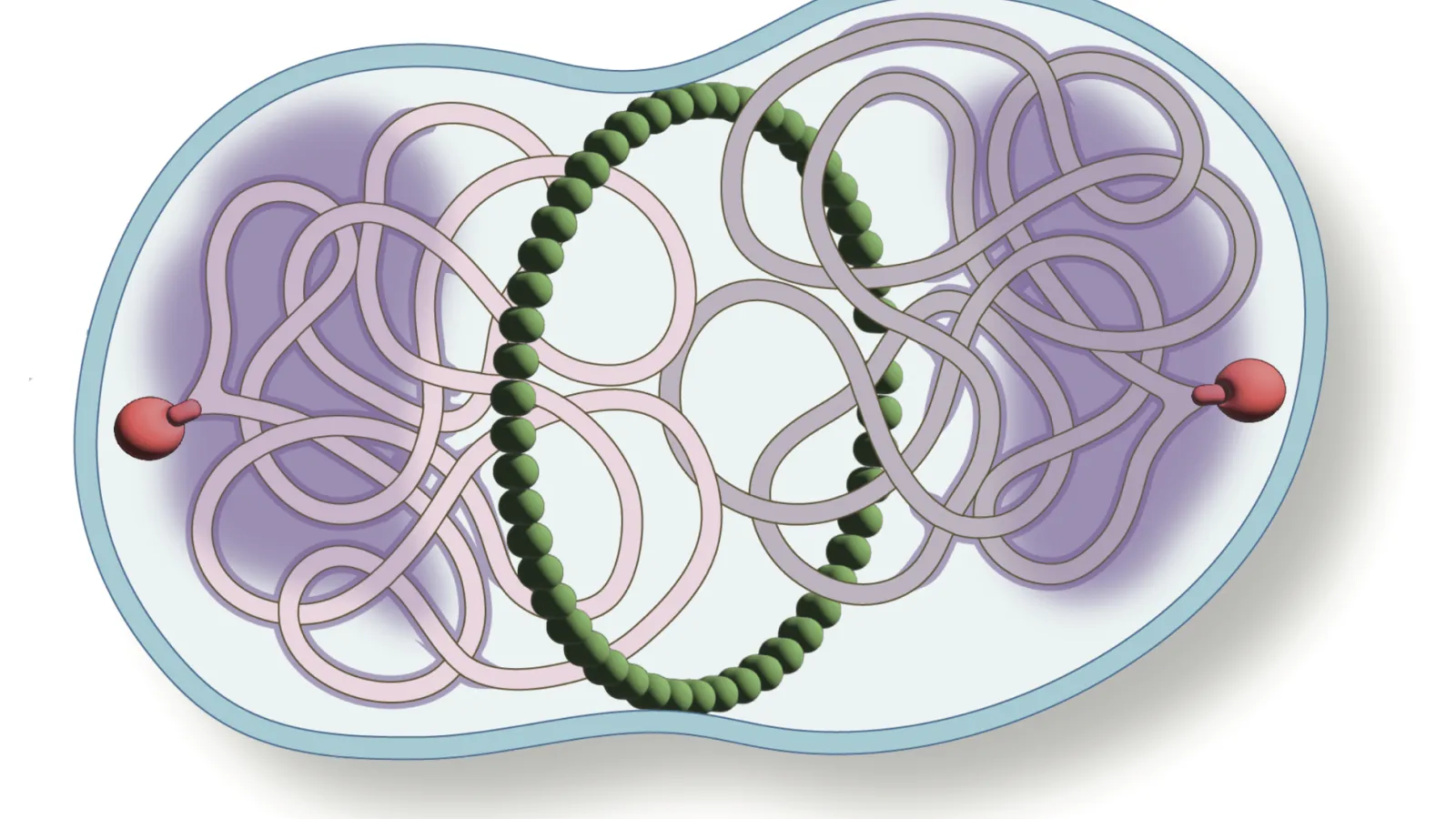
DNA replication duplicates the genome and the resultant chromosomes are then segregated into daughter cells. How this segregation process is achieved in archaea has been poorly understood. A new publication in Nature Communications from Rachel Samson, a Senior Research Scientist in Steve Bell’s lab, reveals that a bacterial-like Par system facilitates chromosome segregation in Sulfolobus species. The segregation machinery causes structural alterations in the chromosome’s conformation and additionally helps control and position the cell division machinery. This interplay ensures that cell division only occurs after chromosomes have been segregated and thus prevents accidental severing of the DNA molecules. (The accompanying image was generated by Anthony Baker, OSU Health Sciences Library.)
Article: Coordination of chromosome segregation and cell division in the archaeon Sulfolobus acidocaldarius